
Beyond the Playbook: Navigating the Psychology and Mythology of CEO Succession
- Carmel Pelunsky
- Dec 22, 2025
- 9 min read
Updated: Feb 2
Research conducted through 2025 revealed that Boards that successfully navigate leadership transitions share a common trait: they bring psychological sophistication to a fundamentally human process. Rather than following rigid playbooks, they acknowledge emotion, create genuine alignment, and have difficult conversations early. This article exposes the unhelpful folklore undermining succession effectiveness and offers seven principles to guide your next CEO transition.

This research emerged from a simple observation: most of the literature on CEO succession planning feels formulaic because it focuses on process and checklists while ignoring the messy, human reality of leadership transitions. CEO successions are particularly emotionally charged for several reasons:
1. High-stakes decision: appointing a CEO is often cited as 'the most important decision a Board will make', and it is very challenging and costly to reverse the decision;
2. Intense scrutiny: There is intense, and often public, scrutiny at the candidate and Board level, with professional legacies at risk; and
3. Emotional intensity: The incumbent is often either holding on, or at least mourning letting go, while for all of the candidate(s) successful or not there are a whole host of emotions, ranging from shame and fear to elation and relief.
This emotional intensity characterises all succession processes. The solution is not to try to make the process purely rational and eliminate each of these elements—this is impossible. Boards must make human dynamics discussable and construct a process that acknowledges and contains them.
With this in mind, we surveyed and interviewed Chairs, Board members, Chief People Officers, CEO candidates (both successful and unsuccessful), and experienced Succession Advisors. Between them, they had participated in over 50 CEO succession processes globally across aviation, financial services, health care, professional services, retail, telecoms, and private equity. Their insights identified a number of commonly held, yet frequently mistaken beliefs that can get in the way of successful transitions, captured in the 'Folklore of CEO Succession', and present ways to successfully address them, summarised in 'Seven Guiding Principles'.
The Folklore of CEO Succession
The research exposed five myths that many boards continue to accept as fact:
Myth 1: The Incumbent CEO Acts in the Organisation's Best Interest
This is perhaps the costliest and most prevalent myth. Towards the end of their tenure, many incumbent CEOs become focused on legacy protection rather than the organisation's future requirements. They unconsciously favour candidates who will continue their strategies and validate their choices, rather than those who will bring critical judgment to the current state. As one Chair noted:
"My CEO kept saying he wanted someone to take us to the next level, but every time we discussed the candidate who could actually do that, he found reasons to dismiss them."
The ways in which a CEO departs their role depends on where to next, as well as their personalities and organisational profiles. Regardless, endings are challenging for all of us, however rationally ready we may be for them. The Chair of a Nominations Committee explained:
"I pay a lot of attention to ensuring the incumbent is acknowledged and celebrated and ends well...and even then, there is almost never a CEO transition I have been a part of without some kind of difficult incident that plays out as their last day approaches, and they don't actually want to let go."
Myth 2: Executive Assessments are Essential to Making Good Judgments
Independent Executive Assessments can generate useful insights on external candidates and function as a calibration mechanism between internal and external candidates. When Boards know their talent through effective, robust talent management, however, Executive Assessments can become a crutch that allows board members to shy away from having challenging conversations and avoid making tough decisions themselves. A Board Member was blunt:
"We have over-processed and over-relied on assessment because making this decision is tough."
Furthermore, no. advisor can play all the roles required for a well-managed CEO succession process. No one person can provide independent assessment, coach candidate(s) and offer objective advice. An experienced advisor knows when to step back from a coaching engagement, when to recommend a colleague and when to encourage the Board to trust itself. A seasoned succession advisor explained his thinking on a particular assignment in this way:
"My role was advisor to the CEO and the Chair and so I chose not to do the assessments. I had previously coached two of the potential candidates and not others and so I had more information on some than others. If I was going to play the role of trusted advisor, I knew someone else who could bring a clean slate to the process would be a better fit for the organisation."
Myth 3: A Profile of Success Guarantees Alignment
Boards often invest in developing a CEO Success Profile which, if done well, can create a shared view on the requirements of the role. They do not, however, acknowledge and discuss the varying (often unconscious) approaches to the selection process. We identified three approaches to the selection process that typically exist across board members:
The personal frame
This frame holds an underlying belief that the 'perfect' candidate can be found. The individual will combine the relevant experience, personal qualities and attributes that match the role requirements. Often there is a specific person in mind that is held as the ideal. Advisors agreed that Private Equity often adopts this frame, becoming very fixed on 'their person' or believing that there is a unicorn to be found.
The systemic frame
This frame holds that the appointment is as much about the broader team and organisation as it is about any one individual. The CEO needs to meet the basic criteria, but the system will find ways of filling the gaps. An 'imperfect' candidate whom the system will accept in the role may ultimately be more effective in the real-day execution of the role than an ideal candidate.
The relational frame
This frame acknowledges that what matters as much as the qualities of the potential CEO is the working relationship the appointee will be able to create with the board, and specifically the Chair. This approach believes that the Board should select the candidate with whom they can build the strongest trust and working partnership, as the effectiveness of a CEO is deeply impacted by the quality of the Board-CEO relationship and their subsequent interactions.
None of the above is right or wrong in and of themselves. The Personal frame sounds ideal but can prolong a process unnecessarily when the perfect candidate simply does not exist or is not available; the systemic frame acknowledges that CEO effectiveness is about more than an individual but is seldom addressed explicitly through executive search and assessments; and finally, the relational frame can obviously support a more constructive relationships but also risks cronyism at the expense of independence. The role of the Chair is to encourage these differences in approach to surface and explore them in the context in which the organisation finds itself at that moment in time. As one interviewee shared:
"The magic happens in those conversations, in those moments, where you witness people revealing what they really think."
Myth 4: Longer Processes Equal Better Outcomes
It is accepted wisdom that an extended development process provides the Board with deeper knowledge of potential candidates and raises the overall capability of the executive team. It is a win-win approach to succession planning for the Board and potential candidates. It is also a win for the advisory firm. Often, they are called in to support the Board in working with the three potential internal successors, and they leave having an expanded program of work. This can be for good reason, as an Advisor explained:
"My recommendation was not to assess and develop the three people originally pre-selected but to say, 'why don't you focus on your entire exec team and put CEO succession to one side for now. There was no time pressure, and I was worried that they were narrowing the field too soon for no reason. Unless you're at the point of readiness for a decision, you want to keep your options open.'"
[As it turned out, the original front-runner was not in the final list of candidates].
These types of extended development programs, however, can cause complexity and organisational anxiety. On a seven-point scale, Board members rated the effectiveness of their most recent CEO succession process an average of 6, while candidates (both successful and unsuccessful) rated them an average of 4.5—revealing a 33% perception gap between how Boards and candidates experience the same process. Candidates cited a 'lack of transparency' as a contributing factor to an ineffective process both through the process itself as well as at the decision-making moment.
The other issue is assessment fatigue:
"All of them felt a bit assessed to death. It dragged on, there was a competitiveness and the feeling of constantly being on show. In some respects, that is a valid test, because as a CEO you are going to be on show all the time, but I do wonder about how much organisational energy and resource the process consumed."
When the organisation has a clear internal candidate(s) in mind, a focused six-month process often serves the organization better than an 18-24 month journey that breeds fatigue and politics. The key question is not 'How long does a good succession process take?' but 'What does this specific situation require?'
Myth 5: Boards Are Eager to Learn
Of the 53 succession processes discussed, none of them had a robust formal review mechanism built in to support the Board's learning. Where reflection on the process had occurred, it had been informal and anecdotal and largely focused on the process leading up to it. This contrasted with the thoughtfulness, openness and care evident in all the conversations.
Hypotheses as to why post-implementations reviews are so few and far between included Board fatigue with the process and advisors moving onto their next gig. As well as that 'human messiness' factor. As one Chair acknowledged:
"How hard it would be for us to face into the fact that we actually made a mistake."
seven guiding principles
Based on our findings, we have developed the following principles to guide you as you navigate the interpersonal and intrapersonal complexity that is a part of every CEO succession process.
1 | The best decision serves the organization's future, not the incumbent's legacy. Remain vigilant for incumbent CEOs seeking legacy validation, board members protecting their influence, or chairs avoiding difficult choices. When you notice these dynamics, name them explicitly. |
2 | Emotion is data, not noise. Succession is not a purely rational process. When board members have strong reactions to candidates, explore why rather than dismissing it as bias. Make emotion discussable. |
3 | Alignment means genuine agreement, not polite consensus. Test for real alignment by having board members explain what they are truly looking for, and articulate concerns and reservations, not just give support. Superficial harmony leads to weaker decisions. |
4 | Know your talent, don't outsource your judgments. Create structured opportunities for the Board to observe candidates in action—strategy discussions, crisis situations, stakeholder interactions. Don't outsource judgment to advisors. |
5 | Context matters. Calibrate timeline to your specific situation. Don't follow a rigid 18-month playbook if a 6-month process better serves the organization. Equally, don't rush because it is uncomfortable. Similarly, when it comes to handovers, there may be reason that a 9-month handover makes sense; at other times, 6 months may be far too long. |
6 | Have the hard conversations early and directly. Confront unsupportive incumbent CEOs, challenge board members' biases, and provide honest feedback to unsuccessful candidates. Avoiding difficult conversations doesn't make them go away—it makes them toxic. |
7 | Succession doesn't end with selection. Plan the transition as carefully as the selection. Manage the outgoing CEO's exit, set up the new CEO for success, retain unsuccessful internal candidates, and conduct a thorough post-process review to capture learning at the six and twelve-month point. |
CONCLUSION
CEO succession will never be a neat, formulaic process. The organisations that have executed it well haven't followed rigid playbooks—they bring psychological sophistication to a fundamentally human process. They acknowledge emotion rather than pretending it does not exist. They create genuine alignment rather than settling for polite consensus. They have difficult conversations early rather than avoiding them until they become crises. Effectiveness does not lie in a perfect processes—it lies in the courage to lead through the messy, human reality of leadership transition.
PAUSE FOR REFLECTION

As you approach your next CEO succession, ask yourself:
What human dynamics do we need to be alert to, given the context?
What is the most courageous thing I could say right now?
What am I noticing but keeping to myself?
about the research
This research is based on in-depth interviews and surveys with Chairs, Board members, Chief People Officers, CEO candidates, and experienced CEO advisors. Collectively they have participated in over 50 CEO succession processes across multiple industries and geographies including Australia, New Zealand, the United Kingdom, and the United States. All insights were gathered under conditions of confidentiality to encourage candid reflection on both successful and challenging CEO succession processes.
about the authors
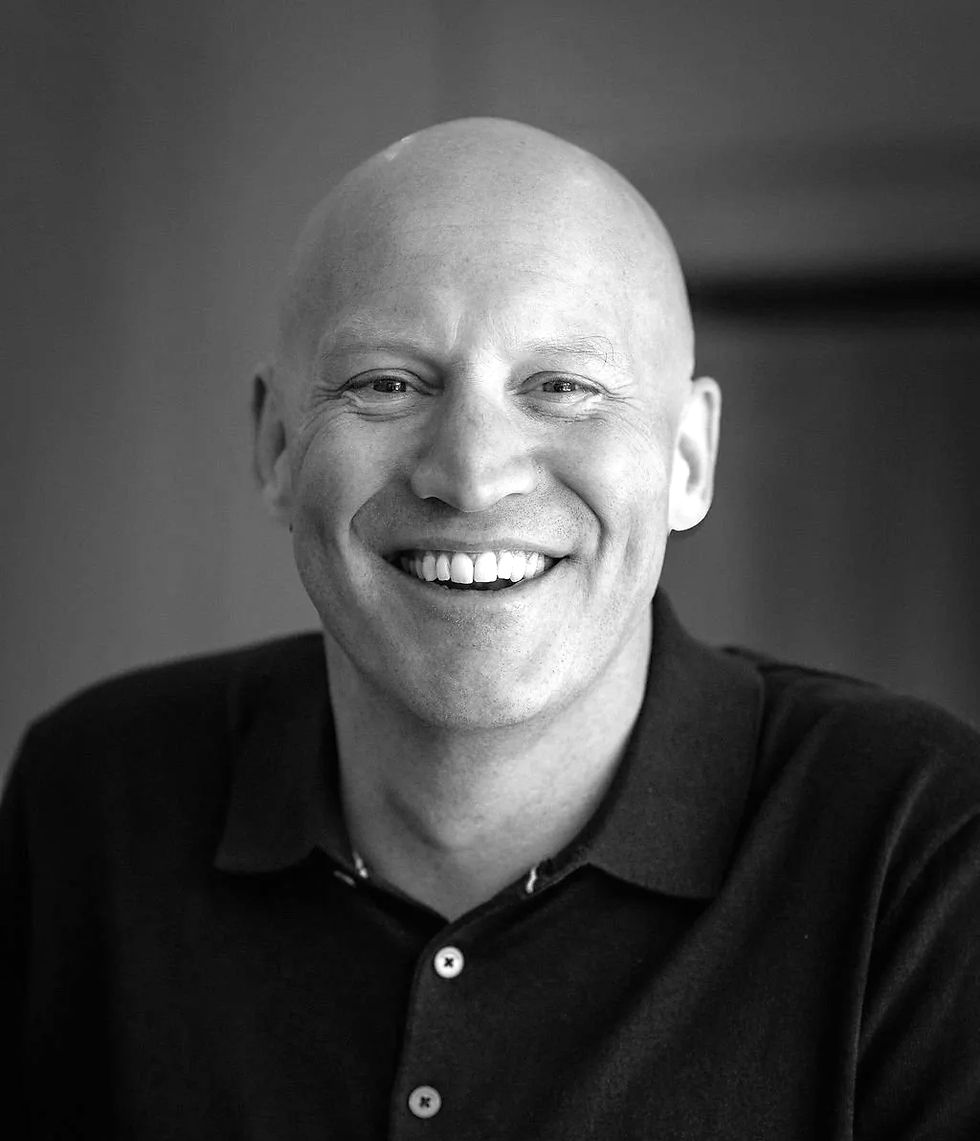
Steve van Zuylen is Founder and Managing Director of Van Zuylen Consulting Ltd. He brings over 25 years of international experience, preparing leaders, executive teams and boards for the future. As a practitioner, he combines his extensive portfolio of client work with hands-on commercial experience, having successfully led consulting businesses through start-ups, scale-ups and acquisitions.
Trusted by leaders globally, he is known for his tireless focus on impact, creativity and ability to navigate complex interpersonal dynamics with a healthy dose of humanity and humour.

Carmel Pelunsky is the Founder and Managing Director of Pelunsky Pty Ltd. Combining a background in strategy and psychology, she has spent over 25 years partnering with executive teams and individual leaders to drive organisational success. Having lived and worked in Johannesburg, London, Athens and Sydney, Carmel brings a global lens to her work. Today, she focuses primarily on CEO Succession and Executive Team Coaching.
Known for combining challenge, support and a playful approach, clients say that in working with Carmel they always get fresh insights, challenge and practical support.


